Leave Your Message
China’s plush toy sector is moving beyond basic imitation products. Buyers now expect safer materials, expressive designs, traceable production, and dependable delivery. A Cat Soft Toy may look simple, but its quality depends on fabric selection, stitching density, filling control, embroidery accuracy, and packaging protection.
Grand View Research estimates that the global stuffed toys market will continue expanding through 2030, supported by gifting, children’s products, collectibles, and online retail. Circana’s toy industry reporting also shows that plush remains one of the strongest and most resilient toy categories in several major markets. These figures are useful, but they do not tell the whole story. Supplier capability still varies sharply across China’s manufacturing regions. That gap deserves scrutiny.
Richard Gottlieb, a veteran toy-industry analyst and CEO of Global Toy Experts, has described the sector as “a business of passion, imagination, and innovation.” His observation fits the Cat Soft Toy market closely. Successful suppliers combine creative character development with measurable production discipline. They should provide material specifications, sample approvals, factory quality checks, and evidence of relevant testing. Buyers should also examine production photos, communication speed, minimum order quantities, and experience with customized designs.
This guide introduces leading China Cat Soft Toy manufacturers and suppliers. It considers their design strengths, manufacturing experience, customization options, export support, and quality practices. No supplier scorecard is perfect. Some information may change after publication. Careful buyers should request current samples and documentation before making decisions.
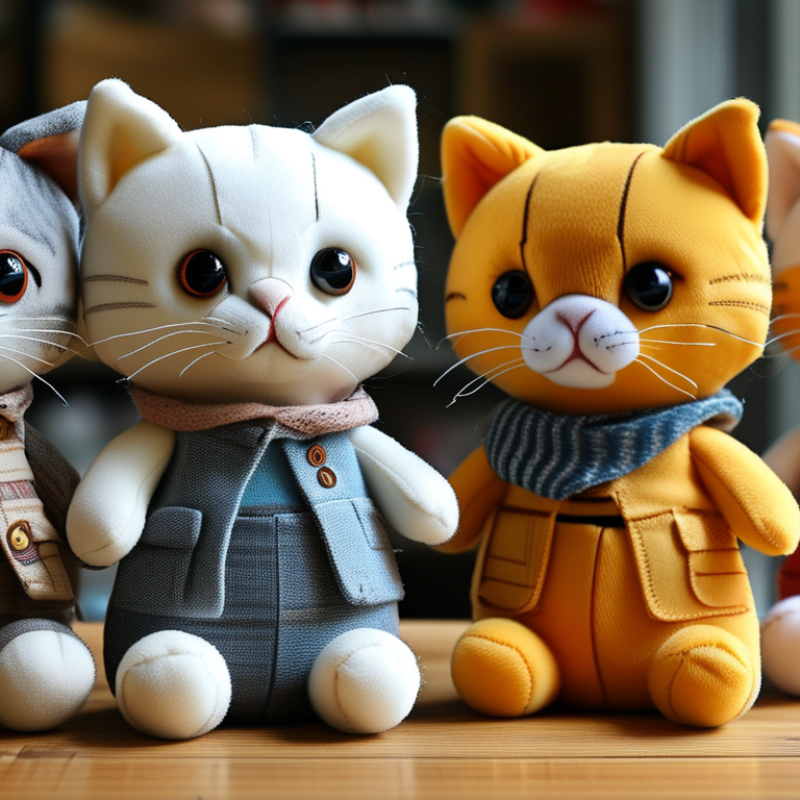
China’s cat soft toy manufacturing industry combines design work, textile production, and detailed quality control. Many factories support custom shapes, embroidered faces, printed fabrics, and various filling weights. A typical production line begins with a paper pattern and a digital sample. Workers then cut fabric panels, stitch curved sections, add stuffing, and inspect the finished toy by hand.
Material selection requires practical knowledge. Short-pile polyester is common because it feels soft and withstands repeated handling. Recycled fabrics may reduce material waste, but their texture and color consistency need careful checking. Suppliers should provide fabric details, filling specifications, and sample records. Seam strength, loose threads, color transfer, and stuffing leakage deserve close attention. Small decorative parts require extra caution, especially for products intended for children. Testing should match the destination market’s requirements.
Experienced buyers usually compare more than catalog photos. They review factory communication, sample accuracy, production capacity, and inspection procedures. A reliable supplier can explain how defects are recorded and corrected. It should also clarify lead times, packaging conditions, and order minimums before production begins. A polished sample can still hide production weaknesses. I have found that repeated sampling often reveals uneven ears, compressed filling, or slight color differences. No factory is flawless. Honest reporting and measurable correction matter more than attractive promises.
| Data Dimension | Industry Information | Manufacturing Relevance | Typical Verification or Consideration |
|---|---|---|---|
| Core Product Category | Cat-shaped plush toys, stuffed animals, soft dolls, cushion-style toys, keychain plush, and customized character products. | Manufacturers generally support both standard catalog products and made-to-order designs based on sketches, artwork, or physical samples. | Confirm dimensions, intended age group, filling type, accessories, packaging, and decoration requirements before sampling. |
| Primary Outer Fabrics | Common fabrics include polyester plush, short-pile plush, long-pile plush, velboa, minky fabric, and printed polyester textiles. | Fabric selection affects softness, appearance, abrasion resistance, color reproduction, production cost, and cleaning performance. | Check fabric composition, pile direction, colorfastness, shedding, surface feel, and consistency between production batches. |
| Filling Materials | Virgin or recycled polyester fiberfill is widely used for soft toys. Polypropylene pellets may be used in selected weighted products. | Filling density influences shape retention, softness, weight, compression recovery, and shipping volume. | Request material specifications and ensure any pellets or small filling components are suitable for the target age group. |
| Main Production Processes | Typical processes include pattern making, fabric cutting, printing or embroidery, sewing, turning, stuffing, shaping, trimming, inspection, and packing. | Process control is important for symmetry, seam strength, facial placement, dimensional accuracy, and consistent stuffing. | Approve a pre-production sample and define acceptable limits for loose threads, uneven seams, embroidery errors, and shape deviation. |
| Decoration Methods | Embroidery, screen printing, heat-transfer printing, appliqué, sewn labels, and securely attached fabric details are commonly used. | Decoration choices affect durability, tactile quality, appearance, and the risk of detachable small parts. | Evaluate attachment strength, print adhesion, color migration, edge finishing, and compliance with small-parts requirements. |
| Manufacturing Clusters | China has established toy and textile manufacturing networks in coastal regions, including Guangdong, Jiangsu, Zhejiang, Fujian, and Shandong. | Regional supplier networks can provide access to fabric mills, accessory suppliers, packaging facilities, logistics services, and testing resources. | Assess the actual factory location, production capability, subcontracting practices, and supply-chain transparency rather than relying only on regional proximity. |
| Customization Capability | Customization may cover size, fabric, colors, facial expression, embroidery, labels, packaging, hangtags, and product accessories. | Complex designs require additional pattern development, tooling, sampling, artwork approval, and quality-control checkpoints. | Use approved artwork, color references, measurement charts, material declarations, and a signed sample as production standards. |
| International Toy Safety Standards | Depending on the destination market, applicable frameworks may include EN 71 in the European Union, ASTM F963 in the United States, ISO 8124, and China’s GB 6675 toy safety standards. | Requirements commonly address mechanical and physical properties, flammability, migration of certain elements, and chemical safety. | Select testing requirements according to the destination country, product age grading, materials, fillings, coatings, and attached components. |
| Mechanical Safety | Eyes, noses, buttons, ribbons, bells, plastic parts, seams, and other components must be evaluated for secure attachment and accessibility. | Mechanical performance is especially important for products intended for infants or young children, where detachable components may present hazards. | Conduct age-appropriate tension, torque, seam, compression, and small-parts assessments through a qualified laboratory or inspection program. |
| Chemical and Material Compliance | Compliance may involve restricted substances in fabrics, dyes, prints, plastics, coatings, adhesives, and metal accessories. | Material selection and supplier documentation help reduce the risk of non-compliant inputs entering production. | Maintain bills of materials, supplier declarations, test reports, and batch records for all safety-critical materials. |
| Quality-Control Stages | Quality checks are commonly performed during incoming-material inspection, in-process sewing, stuffing, final assembly, finished-product inspection, and packing. | Multi-stage inspection helps identify defects before products reach final packing and shipment. | Use written inspection criteria covering appearance, measurements, functionality, labeling, packaging, carton quantity, and workmanship. |
| Packaging Options | Common options include polybags, paper bands, printed boxes, window boxes, hangtags, recyclable paper packaging, and export cartons. | Packaging protects the plush toy from dust, moisture, compression, and handling damage while supporting retail presentation. | Check packaging safety, ventilation requirements, warning labels, barcode accuracy, carton strength, and destination-market labeling rules. |
| Order Planning Factors | Commercial conditions vary according to design complexity, material availability, customization level, order quantity, packaging, and testing scope. | A complete technical specification reduces quotation differences and helps suppliers calculate materials and production capacity accurately. | Confirm sample charges, production schedule, payment terms, inspection arrangements, shipping terms, and responsibilities for compliance testing. |
| Sustainability Considerations | Sustainability initiatives may include recycled polyester, reduced packaging, water-based printing, efficient cutting, and waste sorting. | Environmental claims should be supported by traceable material information and documented production practices. | Request recycled-content evidence, material certifications where applicable, packaging specifications, and clear disposal information. |
| Supplier Evaluation Criteria | Important criteria include relevant product experience, sampling ability, production control, material traceability, compliance knowledge, communication, and export documentation. | A supplier’s ability to consistently reproduce an approved sample is as important as its design and quotation capabilities. | Review factory records, sample quality, test documentation, inspection reports, corrective-action procedures, and production references without relying solely on online listings. |