Leave Your Message

China Best Remote Control Race Cars for Wholesale Buyers?

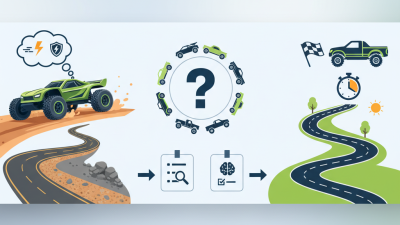
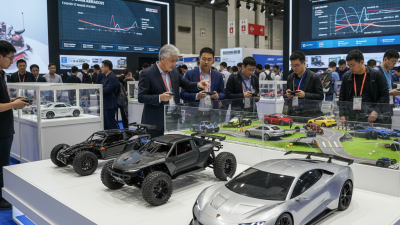
China can offer wholesale buyers a wide range of Remote Control Race Cars, from compact entry-level models to faster cars with more detailed styling. The best choice is not always the fastest or most eye-catching one. It should match your customers, target price, and expected use. For example, a small indoor car may suit gift shops, while a sturdier model may be more suitable for outdoor play.

When comparing suppliers, look beyond product photos. Request clear specifications for dimensions, control range, running time, charging method, materials, and included accessories. Ask how the supplier checks steering, acceleration, and battery performance before shipment. A short test on smooth flooring can reveal issues that a catalog description will not. Check sample quality, packaging, spare-part availability, minimum order quantities, and production lead times as well. Small details count.

That matters.

Wholesale buyers should also compare samples from more than one supplier when possible. Record the differences in fit, finish, control response, and packaging. Confirm that product descriptions and test information are current, and request supporting documents relevant to your market and sales channel. Do not assume every specification will perform identically in real use; surfaces, handling, and battery condition can affect results. No supplier is perfect, and a sample may not represent every unit in a large order. That limitation deserves attention. A careful comparison helps buyers select Remote Control Race Cars with clearer expectations, fewer surprises, and a better fit for their customers.
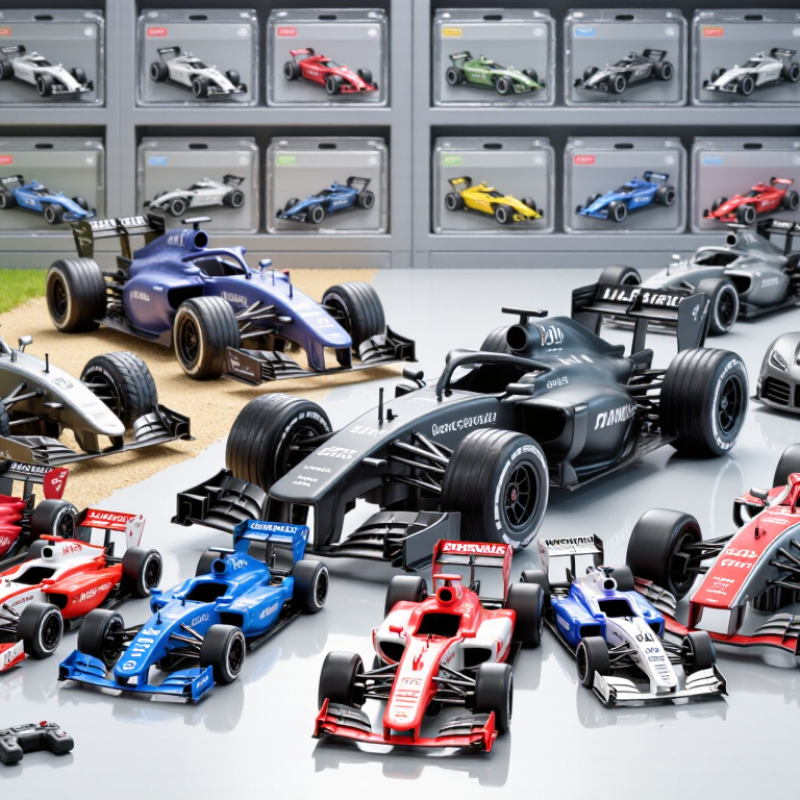
China Best Remote Control Race Cars for Wholesale Buyers?

Define Buyer Requirements by RC Car Scale: 1:10, 1:16, and 1:24

Wholesale buyers should define scale by play space, shelf capacity, and shipping cost—not price alone. A 1:10 car offers more visible detail and a substantial feel, but needs more storage and a larger carton. A 1:16 model is a practical middle option for mixed retail displays. A 1:24 car suits compact shelves, gift sets, and smaller play areas. Actual dimensions vary by vehicle design, so scale alone cannot confirm carton fit. Measure the carton.

Circana reported that U.S. toy sales fell 8% to $28.3 billion in 2023, while average selling prices declined 1%. This broad toy-market result is not specific to RC cars, but it signals the value of testing price points and pack sizes carefully. A balanced order might use 1:16 as the core range, with 1:10 and 1:24 models serving distinct space and budget needs. That mix is not universal. Compare sample cars for turning radius, battery access, and controller comfort before committing. Smaller scale does not automatically mean better handling or lower damage risk. Test real samples.

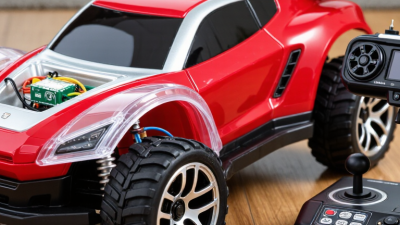
Compare Radio Systems: 2.4 GHz Operation Across 2.400–2.4835 GHz

China Best Remote Control Race Cars for Wholesale Buyers?

A 2.4 GHz label alone does not guarantee a reliable control link. The operating range, 2.400–2.4835 GHz, spans 83.5 MHz. FCC rule 47 CFR §15.247 covers frequency-hopping and digitally modulated devices in this band. IEEE 802.11-2020 also specifies 2.4 GHz Wi-Fi channels, so nearby routers may share airtime with a car’s control system. Small detail. Actual interference depends on the radio design and local conditions.

For wholesale comparisons, ask suppliers how the transmitter and receiver manage channel selection, pairing, and signal loss. A frequency-hopping system can move between frequencies, but its real-world behavior still depends on implementation. Test several cars together in a warehouse, with metal shelving and active Wi-Fi nearby. Watch for delayed steering, interrupted throttle, or receivers that fail to reconnect. These checks reveal more than a printed range claim. FCC Part 15.247 sets technical requirements; it does not certify every model’s control quality.

Also request the radio system’s test documentation and confirm that the stated frequency range matches the supplied transmitter and receiver. IEEE 802.11-2020 is a useful reference for understanding shared 2.4 GHz activity, not a performance rating for RC cars. One caveat: a clean test in an empty room can create false confidence. Real stores and play areas are less predictable.

Evaluate Battery Options: 2S LiPo Packs Rated at 7.4 V Nominal

For wholesale buyers comparing remote control race cars, a 2S LiPo pack offers a useful balance of voltage and size. Its 7.4 V rating is nominal; a fully charged pack reaches 8.4 V. Confirm that the car’s electronic speed controller supports this voltage before ordering. A mismatch can cause poor performance or damage.

Check more than the capacity printed on the pack. Compare connector type, dimensions, discharge rating, and charging requirements with the vehicle’s specifications. A 1,500 mAh pack may suit a compact chassis, while a larger pack can extend run time but add weight. That weight may affect cornering. More capacity is not always better.

Test representative samples before placing a large order. Measure run time under similar track conditions, and inspect how securely each pack fits its compartment. Ask suppliers about consistent cell quality and clear labeling across production batches. Small differences matter. Buyers should also provide a compatible balance charger and practical charging guidance. LiPo packs need careful handling, and users should stop using swollen or damaged packs. One detail is easy to miss: storage charge is lower than full charge. Keep that instruction visible, even if the packaging space feels limited.

Check Toy Safety Requirements: ASTM F963-23 and EN 71 Standards

For wholesale buyers, a remote-control race car needs more than speed and bright packaging. Its safety evidence should match the exact model, materials, and age grading being purchased. ASTM F963-23 is a US toy safety standard covering areas such as mechanical hazards, flammability, and chemical properties. Buyers should confirm which edition and requirements apply to their intended market.

In Europe, the EN 71 series addresses toy safety through several parts, including mechanical and physical properties, flammability, and migration of certain elements. Check that test reports identify the product clearly and cover its actual components. A report for a similar car may not cover a revised body shell, paint, controller, or battery compartment. Small details matter.

Ask suppliers for current, model-specific documentation and clarify who performed the testing. Inspect sample cars for sharp edges, loose screws, small detachable parts, and battery doors that open too easily. For rechargeable models, verify that the relevant battery and charging risks have also been assessed under applicable requirements. Paperwork can drift. Production changes sometimes happen quietly, so compare approved samples with delivered units and request updated evidence when parts or materials change. No single certificate should replace a careful review of the product and its destination-market rules.

China Best Remote Control Race Cars for Wholesale Buyers? - Check Toy Safety Requirements: ASTM F963-23 and EN 71 Standards

Buyer Checkpoint ASTM F963-23 (United States) EN 71 (European Union) What Wholesale Buyers Should Verify
Standard scope A U.S. toy safety specification covering applicable mechanical, physical, flammability, chemical, electrical, and labeling requirements. A series of European toy safety standards. EN 71-1 addresses mechanical and physical properties, EN 71-2 flammability, and EN 71-3 migration of certain elements. Ask which standards and editions were used, and confirm they match the product design, age grading, and destination market.
Mechanical and physical hazards Includes applicable requirements addressing hazards such as small parts, sharp points, sharp edges, and other mechanical or physical risks. EN 71-1 covers mechanical and physical properties, with requirements and tests depending on the toy and its intended age group. Check the car body, wheels, detachable accessories, antennae, and controller for accessible small parts, sharp edges, and breakage hazards.
Age grading and warnings Age grading affects which requirements and tests apply. Applicable warnings and instructions must be considered for the product. Intended age and reasonably foreseeable use are relevant to the applicable toy safety requirements and warnings. Confirm that packaging, product markings, and instructions use consistent age grading and appropriate hazard warnings for each market.
Flammability Contains applicable flammability requirements for toys and toy materials. EN 71-2 specifies flammability requirements for toys within its scope. Request test evidence for the finished product and relevant materials; confirm the report identifies the tested model and material configuration.
Chemical safety Includes applicable chemical requirements within the specification; other U.S. chemical rules may also apply. EN 71-3 addresses migration of certain elements from toy materials. Other chemical obligations may apply under EU law. Identify the materials tested, such as coatings, plastics, and accessible components. Do not treat an EN 71-3 result as proof of compliance with every chemical requirement.
Electrical parts and batteries Electrical or battery-operated features can trigger applicable requirements in the toy standard and other regulations. A radio-controlled toy's electronics and batteries must be assessed against applicable EU toy and product requirements; EN 71 alone may not cover every obligation. Check battery type, compartment security, charging instructions, included charger, and any separate battery or electrical compliance evidence relevant to the model.
U.S. documentation For applicable children's products, U.S. rules require testing by a CPSC-accepted third-party laboratory and a Children's Product Certificate (CPC) issued by the responsible manufacturer or importer. Not applicable as a U.S. document; EU conformity documentation is handled separately. For U.S. shipments, request the CPC and supporting test reports for the exact product. Confirm the responsible party and product identification are clear.
EU conformity documentation A CPC does not replace EU conformity obligations. EU toy products require the applicable conformity assessment and documentation under relevant EU rules, including an EU Declaration of Conformity and CE marking when required. Request the EU Declaration of Conformity, technical documentation information, and evidence supporting the CE marking for the specific model.
Test report traceability Test evidence should support the applicable requirements for the product being sold. The standards and editions used should be appropriate for the product and the current conformity route. Match model numbers, photos, materials, battery configuration, and production version across reports, certificates, labels, and purchase documents.

Note: ASTM F963-23 became the mandatory U.S. toy standard for toys manufactured on or after April 20, 2024, under the applicable CPSC rule. EN 71 is a series of standards; confirm the applicable parts and editions against current EU requirements for the product and market. This checklist is for purchasing review and is not a substitute for a product-specific compliance assessment.

Assess Wholesale Readiness: MOQ, Carton Size, QC, and Spare-Parts Supply

Wholesale buyers should judge remote control race cars by more than unit price. Ask for the minimum order quantity by model and color, and confirm whether mixed cartons are allowed. A low MOQ helps with testing, but it may not reflect the price or lead time for repeat orders.

Carton details affect storage and freight costs. Request the outer length, width, height, gross weight, and units per carton. Then check whether cartons stack securely and fit your warehouse shelves. Small details matter. Ask for a pre-shipment inspection plan covering steering response, throttle control, battery charging, and packaging condition. Agree on a defect-reporting process and replacement terms in writing. A good sample is useful, but it cannot prove every production batch will match.

Spare-parts supply deserves the same attention as the cars themselves. Request a parts list with item codes, prices, stock status, and typical replenishment time for wheels, controllers, body shells, and charging cables. Confirm which parts fit each model. A parts promise without clear lead times is hard to plan around. It is also worth asking how quality issues are recorded and corrected. One overlooked weakness is that buyers may test driving performance but not carton damage after handling; a simple drop test can reveal packaging problems before shipment.

China Remote-Control Race Cars: Wholesale Readiness Checklist

Illustrative buyer-screening scores (0–5), not verified supplier data. Confirm each item against the specific product and purchase order.

How to use: Request the MOQ in writing, carton dimensions and gross weight, documented inspection criteria, and a spare-parts list with availability and lead times before placing a wholesale order.