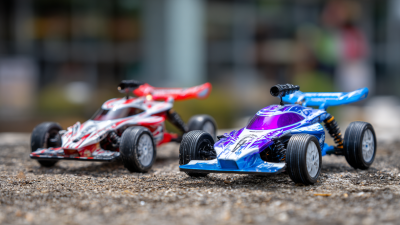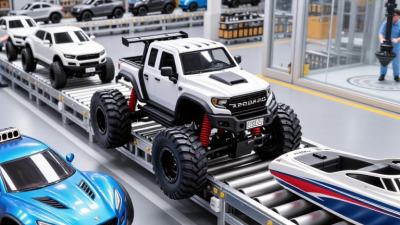
A Remote Control Toy Car turns a child’s hand movements into motion across a floor, driveway, or patch of carpet. Its controls may look simple, but several parts work together. The handheld transmitter sends commands by radio to a receiver inside the car. That receiver directs the motor to move the wheels and a steering mechanism to turn them. A battery supplies the power. Small signals matter. When the driver presses a trigger or moves a stick, the car responds—though not always exactly as expected.
The design varies by model. A basic toy may move forward, reverse, and turn in a few set directions. More advanced cars can offer proportional steering and speed, meaning their response changes with the control input. This distinction helps explain why two cars with similar shapes may feel very different to drive. It also affects how they perform on smooth indoor floors or rough outdoor ground. Not magic. Just connected components.
Understanding how a Remote Control Toy Car works can make choosing, operating, and maintaining one less confusing. Check the recommended battery type, control range, and intended driving surface before use. Keep the car away from water unless its maker specifically says it is suitable for wet conditions. If it veers to one side or loses power, a low battery, loose connection, or wheel obstruction may be worth checking. Small details count. And product descriptions are not always clear, so the manual remains the best source for model-specific guidance.
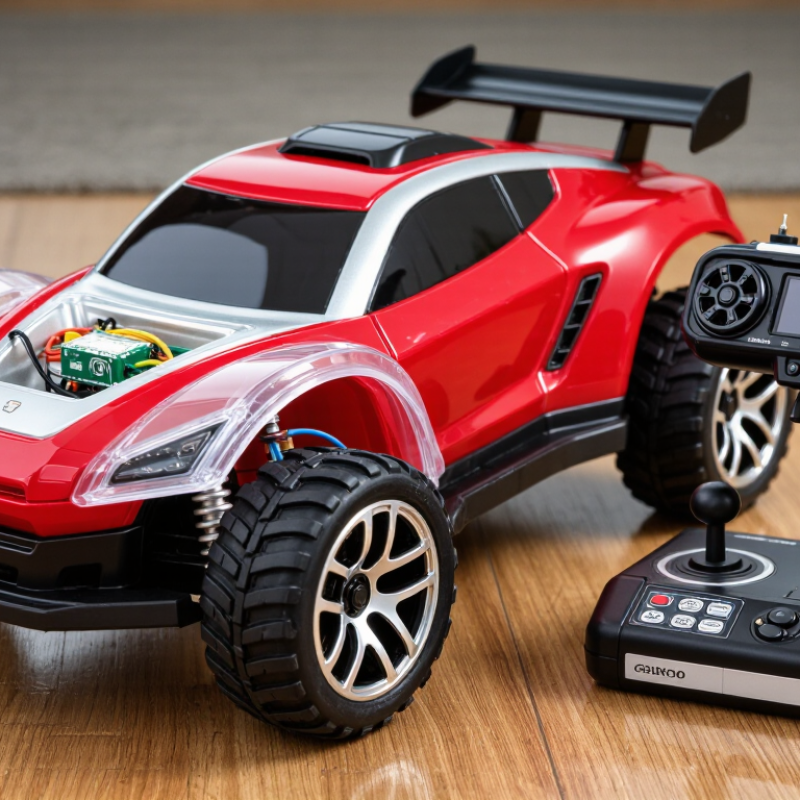
A remote control toy car is a small vehicle that responds to commands from a separate handheld controller. The controller sends signals to a receiver inside the car. That receiver directs the motor and steering system, making the car move, turn, or stop. The exact setup varies, but these parts define the basic idea.
It is more than a car that moves on its own. A pull-back toy stores energy when pulled backward, while a remote control car responds to input during play. That difference matters.
On a living-room floor, a child might steer around a chair leg, pause, then reverse out of a tight corner. The car’s battery supplies power, and its wheels translate that power into motion. Some models use simple forward-and-reverse controls; others allow smoother steering and speed adjustment.
The boundary is not always neat. A toy may have lights or sounds, but those features do not make it remotely controlled. The defining feature is that a person can guide its movement from a distance. Control range and response can vary with the model, battery condition, and surroundings. A car that turns slowly may be frustrating at first. It can also reveal how small changes in steering input affect its path.
What Is a Remote Control Toy Car and How Does It Work?
The Main Components Inside the Car and Controller
Inside a remote control toy car, several small parts work together. The battery supplies power to the motor and electronic components. A receiver inside the car picks up signals from the controller. The electronic speed controller adjusts power to the drive motor, controlling speed and direction. A small servo moves the steering linkage, turning the front wheels. On many cars, these parts sit close together on a plastic or metal chassis.
The controller has its own circuit board and transmitter. Its steering wheel or joystick sends steering commands, while a trigger or stick controls speed. The transmitter sends these commands wirelessly to the car’s receiver. The receiver then passes them to the steering servo and speed controller. The layout can feel cramped, and tiny connectors are easy to overlook during inspection.
Tips: Switch off the car before checking its wiring. Look for loose plugs, tangled hair around the axles, or a battery that feels unusually warm. Keep the wheels off the ground during a brief steering test. Small problems can be hard to spot; even a slightly loose connector may cause uneven response.
| Location | Component | What It Does | How It Works |
|---|---|---|---|
| Car | Receiver | Receives driving commands from the handheld controller. | Its antenna and radio circuitry detect the controller’s signal and pass the decoded commands to the car’s control electronics. |
| Car | Drive motor | Turns electrical energy into motion. | A common toy-car design uses a brushed DC motor. Changing the power supplied to it can change its speed; reversing the polarity can reverse its direction. |
| Car | Motor driver | Controls the power delivered to the drive motor. | Electronic switching circuits respond to the receiver’s commands to regulate motor output and, in many designs, select forward or reverse. |
| Car | Gearbox and drivetrain | Transfers motor rotation to the wheels. | Gears reduce or alter the motor’s rotation and deliver torque to one or more axles, depending on the car’s design. |
| Car | Steering motor or actuator | Turns the front wheels to steer the car. | Depending on the model, steering may use a small motor or a servo. Linkages connect the mechanism to the wheels. |
| Car | Battery pack | Powers the receiver, motor, and other electronics. | Toy cars use different battery types and voltages. The battery supplies electrical energy through wiring to the car’s circuits and motors. |
| Car | Chassis, wheels, and tires | Support the components and provide contact with the driving surface. | The chassis holds the mechanisms in position. The tires transfer the wheels’ rotation into movement across the ground. |
| Controller | Steering and throttle controls | Let the user request turns, forward motion, braking, or reverse. | Buttons, a trigger, or a steering wheel detect the user’s input and convert it into electrical signals for the controller’s electronics. |
| Controller | Control circuit | Encodes the user’s inputs into commands for the car. | The circuit reads the control positions and prepares a radio signal that represents the requested steering and speed. |
| Controller | Radio transmitter and antenna | Sends the commands wirelessly to the car. | Many modern toy cars use a 2.4 GHz radio link, while some models use other radio frequencies. The car and controller must use compatible systems. |
| Controller | Controller batteries | Power the controls and transmitter. | The controller’s batteries provide the energy needed to read inputs and transmit commands. |
In brief, the controller sends a radio command, the car’s receiver passes it to the control electronics, and the motors respond by changing wheel speed or steering direction.
A remote-control toy car follows a chain of tiny instructions. When you squeeze the trigger, the controller converts your movement into a digital command, such as “drive forward at this speed.” Turning the wheel creates a separate steering command. The controller sends these messages as radio waves; no cable connects your hands to the car.
Many modern toy cars use the 2.4 GHz band, though some models use other frequencies. ETSI’s EN 300 328 V2.2.2 technical standard covers wideband equipment operating from 2400 to 2483.5 MHz. Inside the car, a receiver listens for the controller’s signal and passes valid commands to the speed controller and steering servo. The speed controller adjusts power to the motor. The servo moves a small linkage, turning the front wheels. Briefly, command becomes motion.
The exchange happens repeatedly, so steering changes can feel immediate. The radio link may share space with other devices, and obstacles or low batteries can weaken it. That can show up as delayed steering or uneven speed. Not every car handles lost signals the same way. Some stop the motor; others may simply stop responding, so checking the instruction manual matters. A blinking light helps, but it does not prove every command arrived. That detail is easy to overlook.
A remote-control car turns small hand movements into electrical commands. When you push the throttle, the transmitter encodes that input and sends it by radio. The car’s receiver decodes the signal and tells its motor controller how much power to deliver. Direction matters, too. An H-bridge circuit can reverse current through a drive motor, making the wheels turn backward. Steering usually uses a small servo that shifts the front wheels left or right. The commands arrive quickly, but the car still needs grip.
Many modern control links use the crowded 2.4 GHz band. The FCC lists this band from 2.400 to 2.4835 GHz. IEEE 802.15.4 specifies a 250-kilobit-per-second physical-layer rate at 2.4 GHz; this is a useful technical benchmark, not a rate shared by every toy. A typical car may use its own radio protocol.
Inside, the battery supplies the receiver, motor controller, and motors. The controller adjusts motor power in pulses, changing speed without simply wasting excess energy as heat. Tiny details count: a weak battery can soften acceleration, while loose tires can make a precise command look clumsy. That mismatch is easy to overlook. In practice, steering response also depends on surface, tire grip, and servo setup, so the same stick movement may feel different on carpet and pavement.
Most remote control toy cars use alkaline cells, rechargeable nickel-metal hydride packs, or lithium-ion batteries. Alkaline cells are easy to replace, while rechargeable packs reduce repeated battery purchases. Lithium-ion packs can store substantial energy for their weight. The U.S. Department of Energy’s Alternative Fuels Data Center gives a 100–265 Wh/kg range for lithium-ion batteries in electric vehicles; this is chemistry-level context, not a toy-car runtime estimate. Small motors, rough carpet, and cold conditions all affect play time. That part is easy to overlook.
A controller sends radio signals to a receiver inside the car. Many modern systems use the 2.4 GHz band and pair a handset with a specific receiver, helping several cars operate nearby. Older fixed-frequency radios may interfere with one another. Some inexpensive toys use infrared control, which needs a clearer path between handset and car. Proportional controls adjust steering and motor power gradually; simpler systems may only turn or drive at full output. It is easy to overfocus on advertised speed.
Tips: Check the battery label and charger match before use. Let rechargeable packs cool before charging, and stop if a pack looks swollen or damaged. A clean, dry battery compartment helps prevent poor electrical contact.