Leave Your Message

China Top RC Toys Manufacturers for Global Buyers?

China has become a major sourcing base for RC Toys, from compact drift cars to powerful off-road trucks. Global buyers now face a crowded supplier landscape. Factory capability varies widely.

According to Li Wei, a Shenzhen-based RC product engineer, “A reliable RC toy begins with honest testing, not attractive packaging.” This practical view matters when comparing Chinese manufacturers. Buyers should examine motor performance, battery safety, radio range, spare-part availability, and production consistency. A polished sample can still hide weak quality control.

Details reveal the difference. Look for clean solder joints, firm suspension arms, sealed battery compartments, and clearly labeled chargers. Ask whether the factory performs drop tests, cycle tests, and final function checks. Request production photos, inspection records, and independent sample testing when order volumes are high. Supplier communication also matters. A responsive manufacturer usually handles revisions, packaging changes, and replacement parts more effectively.

Names such as WLtoys, Heng Long, and other specialized Chinese factories may appear during market research. However, brand recognition alone cannot prove suitability for every buyer. Some suppliers excel at entry-level models, while others support customized designs and larger retail programs. It is easy to overvalue low prices. That can become expensive later.

A responsible sourcing decision should consider product safety, truthful specifications, intellectual property compliance, and destination-market requirements. Standards and documentation differ across regions, so buyers should verify current rules independently. This guide will compare leading China RC Toys manufacturers through experience, engineering depth, quality systems, customization ability, and export reliability. The assessment is not perfect. Factory conditions can change, and one successful sample proves very little.
China Top RC Toys Manufacturers for Global Buyers?

RC Toy Manufacturing in China: Industry Scope and Product Categories

China’s RC toy manufacturing industry covers a broad range of products for global buyers. Common categories include remote-control cars, trucks, rock crawlers, construction vehicles, boats, and flying models. Each category requires different engineering skills, tooling, and testing procedures.

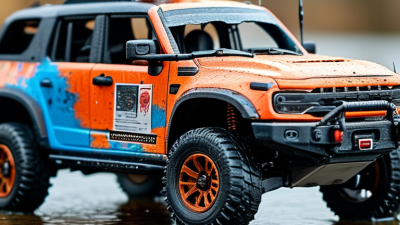
Manufacturers often support OEM and ODM projects, from early sketches to finished retail packaging. A small off-road vehicle may need a reinforced gearbox, sealed electronics, and tires with visible tread depth. A remote-control boat requires water-resistant housing and stable balance. Buyers should inspect motor heat, steering response, battery protection, charging time, and controller range. These details affect customer reviews more than attractive product photos.

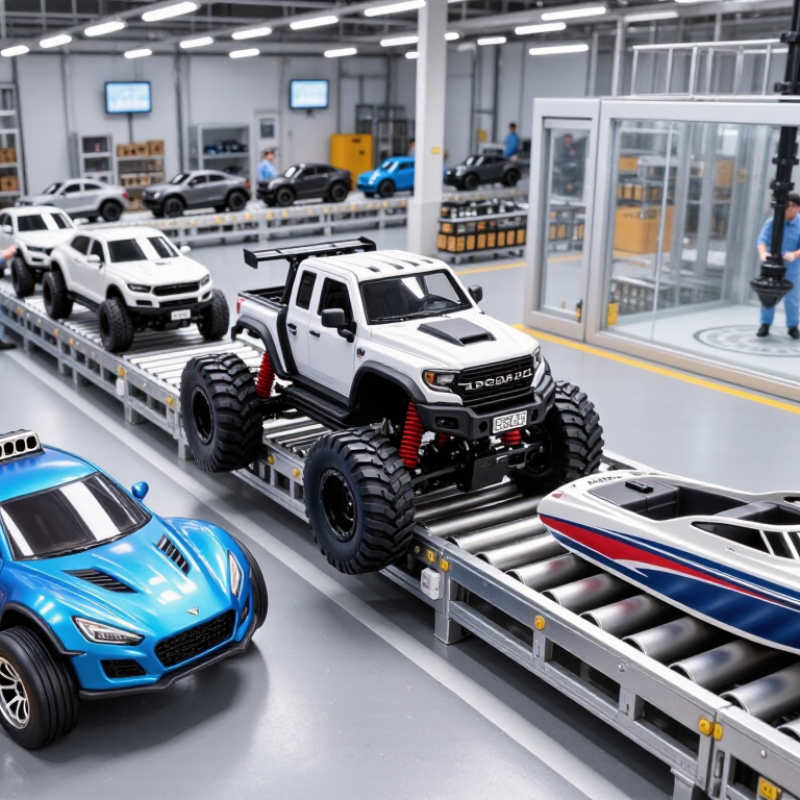
Factory capability varies widely. Some suppliers handle mold development, assembly, painting, and packaging under one roof. Others outsource critical parts, which can weaken quality control. A sample may perform well while production units show loose wheels or inconsistent radio pairing. This happens. Buyers should request pre-production samples, inspection records, material details, and clear defect standards. Product safety requirements also differ by destination, including rules for batteries, small parts, labeling, and radio equipment. Independent testing can reduce uncertainty, but it cannot replace factory communication. A reliable supplier explains limitations instead of promising everything.
How to Identify Reliable Chinese RC Toy Manufacturers

China Top RC Toys Manufacturers for Global Buyers

How to Identify Reliable Chinese RC Toy Manufacturers

China remains a major toy export base. UN Comtrade data for 2023 shows China among the leading exporters in HS 9503, covering toys and recreational models. Statista Market Insights estimates the global toys and games market will generate about US$122 billion in 2025. This scale attracts capable factories, but also inexperienced traders. A reliable RC toy manufacturer should provide a verifiable business license, production address, factory audit records, and clear ownership of tooling. Ask for recent production photos, not only polished showroom images.

Check technical discipline before discussing price. Request samples from the proposed production line. Test steering response, battery charging, range, shell strength, and repeated impact performance. Review documented checks against applicable requirements, such as EN 71 or ASTM F963, based on the destination market. ISO 9001 certification can support process control, but it cannot replace an independent audit. No certificate proves everything.

Tips: Ask for a sample inspection report, component list, and batch traceability record. Compare the same sample after several weeks. Numbers can mislead. A factory may promise 20,000 units weekly, yet lack enough assembly workers during peak season. Check lead times through a small pilot order, then verify packaging, labeling, spare parts, and defect handling. Keep written specifications, because verbal promises often disappear. Even careful buyers miss details sometimes; rechargeable batteries, connectors, and remote frequencies deserve separate checks.

China Top RC Toys Manufacturers for Global Buyers? - How to Identify Reliable Chinese RC Toy Manufacturers

Evaluation Dimension What Reliable Manufacturers Should Demonstrate Documents or Evidence to Request Warning Signs
Product Safety Compliance The product design, materials, labeling, and packaging are assessed against the destination market’s toy-safety requirements. Recent laboratory test reports covering the exact model, materials, age grade, and target market. Common references include EN 71 for the European Union and ASTM F963 together with applicable United States consumer-product requirements. Reports are for a different model, an outdated revision, an unrelated product category, or cannot be verified with the testing laboratory.
Radio and Remote-Control Compliance Products containing radio transmitters are designed and tested according to the rules of each intended sales market. Radio test reports, frequency information, operating-power data, and market-specific conformity documentation. EU shipments may require assessment under the Radio Equipment Directive; United States shipments may require applicable FCC authorization. The supplier cannot identify the operating frequency, provides no radio test evidence, or uses one compliance file for every country without market review.
Battery and Charging Safety Battery cells, chargers, connectors, protection circuits, and charging instructions are matched to the product and tested for foreseeable use. Battery specifications, charger ratings, safety test reports, instructions, and a UN 38.3 test summary for applicable lithium-battery shipments. Unlabeled cells, incompatible chargers, no overcharge or short-circuit protection information, or missing transport documentation.
Material and Chemical Control Plastics, coatings, adhesives, cables, and electronic components are controlled against the chemical restrictions of the destination market. Material declarations, supplier component lists, restricted-substance test reports, and production records linking test samples to the finished product. The supplier relies only on a general “non-toxic” statement or refuses to identify materials used in the product.
Factory and Process Capability The production system can manage injection molding, electronic assembly, painting, final assembly, functional testing, and packaging as required by the product. Factory profile, production-flow photographs or video, equipment list, process-control plan, inspection procedures, and an independently conducted factory-audit report. The supplier acts only as an intermediary, cannot identify the actual production site, or changes factories without written approval.
Quality-Control System Incoming materials, in-process assemblies, finished units, remote controls, batteries, and packaging are inspected against documented specifications. Quality manual, inspection checklists, sampling plan, calibration records, defect classification, corrective-action reports, and pre-shipment inspection results. Only visual inspection is performed, inspection records are handwritten without traceability, or defects are accepted without corrective action.
Sample-to-Mass-Production Consistency The approved sample, bill of materials, firmware, artwork, packaging, and production version are formally controlled. Golden sample, signed specifications, approved bill of materials, artwork files, change-control procedure, and batch traceability records. The mass-production unit differs from the approved sample, components are substituted without approval, or firmware changes are undocumented.
Reliability and Performance Testing Testing covers driving performance, remote-control range, repeated operation, impact exposure, wheel or gear durability, charging cycles, and packaging protection where relevant. Reliability test plan, acceptance criteria, test records, failure analysis, corrective actions, and transport or drop-test results for the packed product. Performance claims are based only on demonstrations, with no repeatability data or defined acceptance criteria.
Customization and Engineering Support The supplier can manage approved changes to tooling, structure, electronics, firmware, colors, packaging, and user documentation. Engineering drawings, tooling ownership terms, prototype schedule, change-request forms, development milestones, and intellectual-property confidentiality terms. The supplier promises customization without drawings, prototypes, engineering review, or documented tooling arrangements.
Packaging and Labeling Readiness Packaging includes required warnings, age grading, instructions, battery information, importer details, recycling marks, and language versions for the destination market. Final artwork proofs, packaging specifications, multilingual instruction files, carton dimensions, gross-weight data, and destination-market labeling review. Labels are added at the last minute, warnings are translated automatically without review, or carton data changes after quotation.
Commercial Transparency Quotations clearly separate tooling, product, packaging, testing, sampling, logistics, payment terms, warranty, and after-sales responsibilities. Formal quotation, pro forma invoice, manufacturing agreement, quality agreement, warranty terms, payment instructions, and documented lead-time assumptions. Unexplained price changes, personal payment accounts, vague warranty terms, or pressure to pay before specifications are approved.
Export and After-Sales Support The supplier can provide export documents, spare parts, replacement procedures, troubleshooting support, and a defined process for handling customer complaints. Packing list, commercial invoice, shipping information, spare-parts list, repair instructions, response-time commitment, and complaint-resolution records. No spare parts are available, technical support ends after shipment, or responsibility for defects is not defined in the contract.

Buyer note: Compliance requirements vary by destination, product design, age grade, battery type, and radio function. Verify the final product configuration before placing a production order.

Key Standards for Quality, Safety, and Product Compliance

China Top RC Toys Manufacturers for Global Buyers?

Quality, safety, and compliance should guide every RC toy purchase. A capable manufacturer should provide clear material records, production controls, and traceable batch information. Inspect the vehicle body for sharp edges, loose parts, weak wheels, and exposed wiring. Small screws and detachable accessories need careful choking-hazard evaluation. Battery compartments should close securely and resist overheating during normal use.

Market requirements differ. For the United States, buyers may review CPSIA obligations and ASTM F963 testing. European shipments commonly require EN 71 assessment, chemical controls, and applicable radio equipment compliance. Other markets may request local safety marks, language labels, or importer records. Do not rely on a certificate image alone. Confirm the test report matches the exact model, battery, remote controller, and factory. This detail is often missed.

Tips: Request a pre-production sample and test it for steering, braking, charging, signal stability, and drop resistance. Ask for age grading, warnings, manuals, and packaging proofs in the destination language. Keep inspection photos and batch numbers. A factory audit can reveal inconsistent assembly or recycled components. Yet no checklist is perfect. Repeated inspections remain necessary, especially after design changes or cost reductions. Reliable manufacturers welcome corrective actions and explain limitations instead of promising impossible results.

Comparing Prices, Customization, and Minimum Order Requirements

For global buyers, Chinese RC toy manufacturers compete through price, customization, and flexible minimum orders.

Grand View Research estimates the global RC toys market could exceed USD 6 billion by 2030, with strong growth in hobby and educational products. However, a low factory quote can hide tooling, packaging, battery, and inspection costs. Basic models often start near USD 8–20 per unit at larger volumes, while customized designs may exceed USD 30. These are working ranges, not fixed prices.

Customization usually affects MOQ.

Adding a logo may require 100–300 units, while new molds can require 1,000 units or more. Packaging changes may begin at 500 units.

The 2024 Circana Global Toy Market Report noted uneven toy demand across major markets, so factories increasingly offer smaller trial orders. That sounds helpful. It is not always enough.

A lower MOQ may bring higher unit costs, weaker packaging choices, or longer sampling times.

Tips:

Ask for three samples from the same production line. Test driving range, charging time, controller response, and drop resistance. Compare landed cost, not factory price.

Request recent quality records and independent pre-shipment inspection. Leave room for revision; early specifications are often incomplete.

A perfect first brief is unrealistic.

Always confirm whether the quoted MOQ applies per design, color, or total order.

Export, Shipping, and Supplier Management for Global Buyers

China Top RC Toys Manufacturers for Global Buyers?

Export planning should begin before the purchase order. UNCTAD’s Review of Maritime Transport reports that over 80% of global merchandise trade moves by sea. For RC toys, this makes carton efficiency important. Measure packed dimensions, not only product weight. A pallet with oversized cartons can lose margin quickly through volumetric freight charges. Ask suppliers for accurate HS-code information, commercial invoices, packing lists, and origin documents. Requirements vary by destination. They should be checked with a qualified customs professional.

Supplier management needs visible evidence. The World Bank’s Logistics Performance Index 2023 shows clear differences in customs, tracking, and delivery performance between trading markets. Do not judge a factory only by photographs or a low quotation. Review production capacity, quality records, export experience, and response speed. Approve a sealed sample before mass production. Record battery type, controller range, accessories, carton markings, and testing requirements. Small errors compound.

Use measurable controls. Track on-time delivery, defect rates, inspection results, and corrective-action closure. A pre-shipment inspection should match the approved sample, including steering response, charging behavior, packaging strength, and warning labels. Keep communication written. Changes to molds, components, or packaging need approval before production. A single supplier may appear efficient, but dependence creates risk. Dual sourcing can improve resilience, although it may increase coordination costs. This trade-off deserves regular review, not automatic acceptance.

China RC Toys: Typical Export Shipping Transit Times

Sea freight is generally the most cost-efficient option for larger RC toy shipments, while express and air freight provide faster delivery for samples, urgent replenishment, and smaller orders. Transit times are typical planning ranges and exclude production, customs clearance, and inland delivery.

Data unit: calendar days. Typical logistics planning ranges for China export shipments; actual timing varies by destination, route, season, and customs procedures.