Leave Your Message

China Top Bunny Soft Toy Suppliers for Wholesale Buyers?

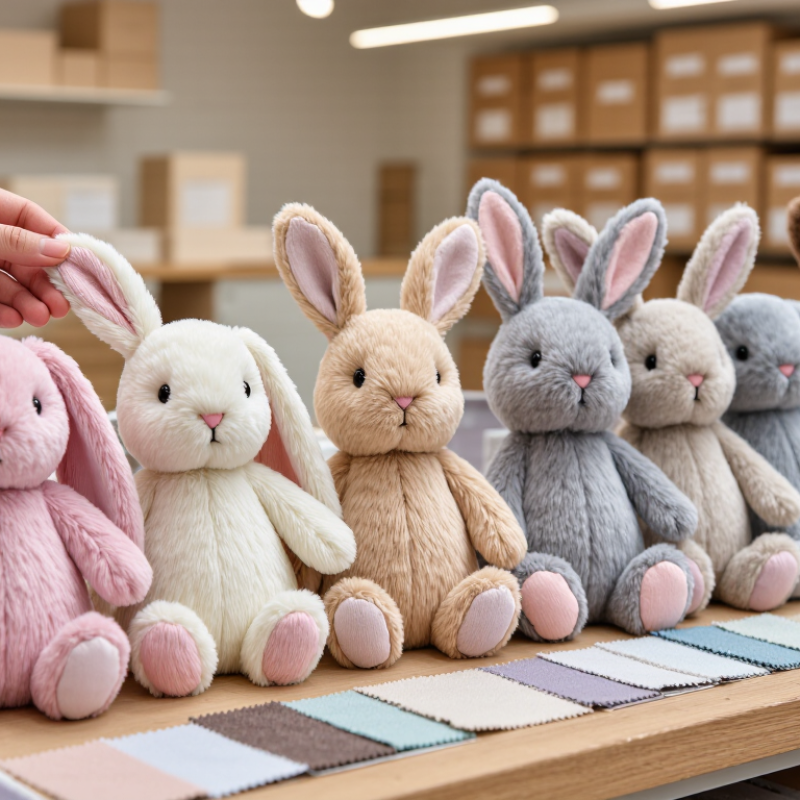
Choosing a China supplier for a Bunny Soft Toy requires more than comparing catalog photos and unit prices. Wholesale buyers need clear information about materials, production capacity, minimum order quantities, and delivery schedules. Small details matter. A soft fabric in a product image may feel different in hand, while stitching around the ears or seams can affect durability. A pre-production sample helps reveal these differences before a larger order is placed.

This guide looks at supplier selection through practical checks rather than rankings alone. It explains how to compare manufacturers and trading companies, review product specifications, and ask about inspection procedures. Buyers can also check whether a supplier can provide consistent colors, custom labels, or packaging suited to their sales channels. Ask for written details. Clear answers make quotations easier to compare and reduce avoidable misunderstandings.

No supplier is a perfect fit for every buyer. A small business may value flexible order quantities, while a larger retailer may prioritize repeatable quality and dependable production planning. Even a polished website is not proof of factory capability. Verify important claims, request relevant documents, and agree on sample approval, defect handling, and shipment terms before confirming an order. These steps cannot remove every risk, and timelines can still change. But careful questions and documented expectations give wholesale buyers a more reliable basis for choosing a China Bunny Soft Toy supplier.
China Top Bunny Soft Toy Suppliers for Wholesale Buyers?

Define China’s Bunny Soft Toy Supplier Landscape: Factories, Traders, and OEMs

China’s bunny soft-toy supplier landscape includes factories, trading companies, and OEM/ODM manufacturers. Direct factories may offer closer control over fabric, stitching, and stuffing, but their minimum order quantities can be high. Traders often combine products from several workshops and may support smaller orders. The trade-off is less visibility into the actual production floor. OEM/ODM suppliers can adapt ear shapes, embroidery, labels, and packaging to a buyer’s design. Ask who owns the pattern and who handles quality checks.

Circana’s 2023 global toy industry report found toy sales fell 7% across 12 major markets that year. This figure covers toys broadly, not bunny plush alone, but it signals why buyers should test demand before placing large orders.

Request a sample with the intended fabric and filling. Check seam strength, pile consistency, and how the toy recovers after squeezing. Small details matter. Confirm sample and bulk production use the same materials, and ask for dated inspection photos or a third-party inspection option. A polished sample is useful, but it cannot prove every production batch will match.
Compare Wholesale Suppliers by MOQ, Sample Lead Time, and Production Capacity

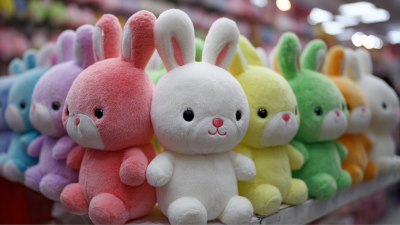
For wholesale buyers, a bunny soft toy supplier’s quoted price tells only part of the story. Compare minimum order quantity, sample lead time, and production capacity before requesting a bulk quote. A low MOQ can help test demand, but smaller runs may cost more per toy. Ask whether the MOQ applies to one design, one fabric color, or a combined order.

Sample timing should include pattern approval, stitching, and any requested revisions. For a bunny with long, floppy ears, check that both ears match in length and that the embroidered face sits evenly. Ask for a written sample schedule and clarify when the clock starts. A quick sample is useful, but not if key details are skipped. Even a neat sample can mislead.

Production capacity needs practical evidence. Ask how many units the workshop can complete monthly for your design, and whether that estimate includes quality checks and packing. Request a recent production timeline with sensitive details removed, or discuss a smaller trial order before scaling up. I would compare suppliers using the same toy specifications and delivery assumptions. Estimates are not guarantees, and capacity can change when several large orders overlap. Leave room for a delay; plans sometimes slip.

Assess Plush Materials and Construction Against EN 71-1 Mechanical Safety Tests

For wholesale buyers comparing bunny soft toy suppliers in China, EN 71-1 deserves more than a checkbox. It covers mechanical and physical safety, including hazards created by small parts, seams, and accessible components. A soft rabbit can look sturdy on a sample table and still fail after repeated handling. Inspect the ear attachments, embroidered features, tail, and clothing fasteners.

Ask for test reports that match the exact toy design, materials, and intended age group. Check whether eyes or noses can loosen under applicable tension or torque tests, and whether seams expose filling after stress. A zipper, ribbon, or decorative button may change the risk profile. Details matter. Reports for a similar model are not enough. That distinction is easy to overlook when production deadlines are tight.

Construction choices also affect consistency. Request details about fabric, thread, stuffing, and how suppliers control sewing quality across batches. A plush fabric may conceal a weak seam during a quick visual check. Ask how samples were selected and whether the tested version reflects current production. Independent laboratory testing adds useful evidence, but it cannot replace clear product records and careful incoming inspections. I would still question a report with vague model identification; paperwork can look convincing while leaving real gaps. Keep the toy, report, and purchase specifications aligned.

Check EN 71-2 Flammability Requirements and EN 71-3 Migration Limits for 19 Elements

Wholesale buyers comparing bunny soft toy suppliers should look beyond a general safety statement. Ask for test reports that identify the exact toy model, materials, and tested sample. Details matter.

EN 71-2 addresses flammability. For a plush bunny, construction, fabric, and any attached parts may affect how the toy behaves in a flame test.

EN 71-3 assesses migration limits for 19 elements from accessible materials. Different material categories can have different limits, so a report for one fabric may not cover printed details, coatings, or plastic eyes. Check the report carefully.

Ask when testing took place and whether the tested sample matches current production. A small change in dye, filling, or decoration can make an old report less useful. Keep records for each SKU and ask the supplier to explain any unclear test scope. That is practical, not fussy. A neat certificate can still leave gaps. Even experienced buyers may miss them when reviewing documents quickly. Compare the report with the toy in hand: its soft pile, stitched seams, labels, and small accessories should all make sense against the listed materials.

Verify U.S. and EU Market Compliance Through ASTM F963 and EN 71 Standards

China’s bunny soft toy suppliers should support every wholesale order with current, traceable compliance records. For U.S. sales, ASTM F963 covers toy safety requirements, including mechanical hazards, flammability, and certain materials. Buyers should confirm that testing matches the product’s age grading and production design. A report for one sample may not reflect later changes.

Ask for test reports from an appropriately accredited laboratory, plus the documentation required for the destination market. Check details closely: loose stitching, detachable eyes, and accessible stuffing can change a toy’s risk profile. Small details matter. In the United States, applicable toys also require a Children’s Product Certificate backed by testing.

The U.S. Consumer Product Safety Commission’s 2023 Toy-Related Deaths and Injuries report estimated 231,700 toy-related emergency-department injuries among children aged 14 and younger. This is not a plush-toy-only figure, but it shows why verification deserves attention. For EU sales, EN 71 testing commonly addresses physical and mechanical properties, flammability, and migration of certain elements. The European Commission’s 2023 Safety Gate report recorded 3,412 alerts across product categories, underscoring the value of documented checks. Confirm the applicable EN 71 parts, CE marking documentation, and EU Declaration of Conformity. Paperwork can look complete while missing a changed fabric, dye, or seam; buyers should compare reports against the actual shipment.

China Top Bunny Soft Toy Suppliers for Wholesale Buyers? - Verify U.S. and EU Market Compliance Through ASTM F963 and EN 71 Standards
Evaluation Dimension U.S. Market Check EU Market Check Evidence to Request from a Supplier Wholesale Buyer Action
Applicable toy safety standard Check the applicable edition of ASTM F963. Toys subject to the U.S. toy safety rule must comply with the incorporated ASTM F963 requirements. Check applicable EN 71 requirements under the EU Toy Safety Directive 2009/48/EC. Common parts include EN 71-1, EN 71-2 and EN 71-3. A test report identifying the exact product, materials, age grade, standard and edition tested. Confirm that the report covers the production version being ordered, not just a similar sample.
Mechanical and physical safety ASTM F963 includes applicable mechanical and physical safety requirements, such as tests for hazards arising from use and foreseeable abuse. EN 71-1 addresses mechanical and physical properties, including applicable small-parts and construction hazards. Relevant test results for seams, attached features, accessible components and any age-grade-specific hazards. Review the finished bunny, including ears, eyes, nose, clothing and accessories, for loose or detachable parts.
Flammability Verify the applicable flammability provisions in ASTM F963 for the toy and its materials. EN 71-2 specifies flammability requirements and test methods for toys within its scope. Test documentation that identifies the tested fabric, pile, filling and any other relevant materials. Check that material or construction changes are reviewed for their effect on test coverage.
Chemical safety Assess applicable ASTM F963 chemical requirements and other U.S. rules that may apply to the product, including requirements based on intended age and use. EN 71-3 addresses migration of certain elements from toy materials. Other EU chemical rules may also apply, depending on the product and materials. Material-specific test reports and a bill of materials covering fabric, dyes, coatings, plastics, accessories and filling where relevant. Do not treat a generic material declaration as a substitute for product-relevant compliance evidence.
Age grading and warnings Age grading affects which requirements apply. Review applicable U.S. warning and labeling rules for the product and intended age group. The EU Toy Safety Directive requires applicable warnings and information to be provided in the language required by the destination market. Proposed age grade, packaging artwork, labels and the rationale used to determine warnings. Check each destination market’s language and labeling needs before approving packaging.
U.S. certification documentation For applicable children’s products, the responsible party must issue a Children’s Product Certificate based on testing by a CPSC-accepted third-party laboratory. The U.S. certificate is not a substitute for EU conformity documentation. A product-specific CPC, where required, and supporting test reports and traceability details. Confirm who will provide required certificates and ensure product identification matches the shipment.
EU conformity documentation EU documentation does not replace U.S. requirements. The manufacturer must complete the applicable conformity assessment, draw up the EU Declaration of Conformity and prepare technical documentation; CE marking is required for toys placed on the EU market. EU Declaration of Conformity, technical documentation information and evidence supporting the conformity assessment. Verify that the documentation identifies the toy model and applicable EU legislation and standards.
Sample and production consistency Compliance evidence needs to relate to the product actually offered for sale. The manufacturer must ensure continued conformity of production with applicable requirements. Approved sample, material specifications, change-control process and batch or lot traceability information. Agree in writing that material, design or factory changes will be disclosed and reviewed before shipment.
Report review and scope Check the laboratory, report date, product identifiers and scope against applicable U.S. requirements. Check that the report covers the applicable EN 71 parts and the relevant EU product configuration. Complete reports with laboratory details, sample description, test methods, results and any limitations. Ask a qualified compliance professional or laboratory to review gaps; a passed test does not automatically establish compliance with every legal obligation.

Note: Applicable requirements depend on the toy’s design, materials, intended age, claims and destination market. Confirm the current legal requirements and standard editions before placing a wholesale order.