China Top Rabbit Soft Toy Manufacturers for Global Buyers
Global toy buyers are sourcing into a market shaped by changing demand, price pressure, and close quality checks. Circana’s 2023 Global Toy Industry Performance report recorded a 7% decline in toy sales across the markets it tracked. That figure covers toys broadly, not rabbit plush toys specifically. Still, it is a useful reminder: buyers should validate demand before committing to large orders.
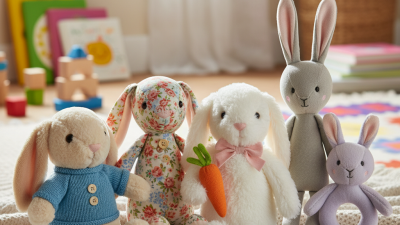
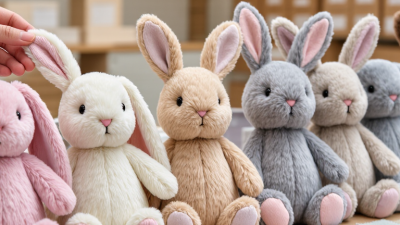
A Rabbit Soft Toy may look simple on a product page. In production, small details matter: even stitching around the ears, secure seams, consistent filling, and a soft surface that matches the approved sample. China’s manufacturers offer buyers options in design, materials, and production scale, but capabilities vary. A polished sample is not proof of consistent bulk quality. Ask how factories control changes between sampling and production, and request clear inspection records.
This guide introduces China-based rabbit soft toy manufacturers for global buyers, with attention to product development, customization, communication, and quality assurance. Buyers should also confirm that materials, labeling, and testing meet the requirements of their destination markets. Applicable standards differ. A supplier’s general assurance is not a substitute for checking the details. The right partner is not simply the one with the lowest quotation; it is the one that can explain its process and provide evidence buyers can review.
China’s Rabbit Plush Sector: Export Clusters and Manufacturer Types
Rabbit plush sourcing is shaped by regional supply chains, not one national factory belt. Guangdong offers dense access to sewing, embroidery, packaging, and export services. Zhejiang has specialist toy-making towns, while Jiangsu supports a mix of larger manufacturers and smaller workshops. Cluster names help buyers shortlist suppliers, but they do not prove factory capability.
The China Toy and Juvenile Products Association’s 2023 industry review reported China’s toy exports at about US$40.7 billion. This figure covers toys broadly, not rabbit plush alone. The distinction matters.
Rabbit designs rely on precise ear symmetry, secure seams, soft-touch fabric, and consistent filling. General toy export figures cannot confirm those details.
Manufacturers typically include OEM factories, design-led ODM suppliers, and trading companies coordinating production across workshops. OEM suppliers can follow a buyer’s specification; ODM teams may develop patterns and samples in-house. Export-ready factories often provide sample approval, production checks, and carton planning. Buyers should still inspect stitching, color consistency, and how the plush recovers after compression. Not every supplier controls every step. That gap deserves attention, especially when a factory outsources embroidery or stuffing. A clear production map and sample review often reveal more than a polished catalogue.
How to Compare Factories: ISO 9001 Audits, Capacity, and Lead-Time Data
When comparing China’s rabbit soft toy manufacturers, treat an ISO 9001 certificate as a starting point, not proof of consistent workmanship. ISO’s 2022 Survey of Certifications to Management System Standards reported more than 1.2 million valid ISO 9001 certificates worldwide. That scale makes certificate checks important: confirm the factory’s legal name, site address, scope, and current validity with the issuing certification body. Then review recent audit findings, corrective-action records, incoming-fabric checks, and sewing-line inspections. Ask to see how the factory controls small details, such as ear symmetry, seam strength, and filling weight. Paperwork can look neat. Production may not.
Capacity figures need context. Ask for monthly output specifically for similar plush toys, not the factory’s total across unrelated products. Request a recent production plan showing sample approval, material arrival, sewing, inspection, and packing dates. Compare promised lead times with dated production records from several completed orders, allowing for seasonal peaks and custom fabric sourcing. The World Bank’s 2023 Logistics Performance Index assesses shipment timeliness alongside customs and infrastructure; it is a useful reminder that factory completion and delivery time are different measures. A supplier’s estimate is still only an estimate.
Tips: Ask for a small pilot order and a dated milestone schedule. Verify inspection records against the actual sample. If answers are vague, pause. A factory may have strong capacity but weak scheduling; that trade-off is easy to miss.
Rabbit Toy Specifications: Plush Fabric, Seam Strength, and Fiberfill
Rabbit soft-toy quality begins with fabric that feels gentle but withstands repeated handling. Short-pile plush is easier to inspect for loose threads, while longer pile can hide skipped stitches. Check fabric recovery after gently compressing an ear or paw. It should return without a visibly distorted surface. Textile Exchange’s Materials Market Report 2024 estimates that polyester made up 57% of global fiber production in 2023. This is useful supply-chain context, not proof that a particular toy’s filling is safe or durable.
Seam strength deserves close attention at the neck, ears, and limb joints, where pulling concentrates stress. Ask suppliers to test seams on the actual plush fabric and finished construction, rather than relying only on a fabric swatch. Inspect seam allowances for exposed edges, uneven stitching, and gaps that could release fiberfill. Polyester fiberfill is common, but even filling matters: lumpy stuffing can leave a rabbit’s head firm on one side and flat on the other. Small details matter. A documented inspection record makes comparisons between production samples more reliable.
Tips: Request close-up photos of high-stress seams and ask how fill weight is checked. Squeeze several samples, not just one. If the stitching looks strong but the fabric tears beside it, revisit the material choice; that detail is easy to miss.
Safety Standards by Market: ASTM F963, EN 71, and ISO 8124
For global buyers, rabbit soft toys should be assessed against the rules of each intended market, not one universal checklist. In the United States, ASTM F963-23 addresses mechanical and physical hazards, flammability, and specified chemical risks; applicable requirements are enforced under federal toy-safety rules. The U.S. Consumer Product Safety Commission reported an estimated 231,700 toy-related emergency-department injuries among children aged 14 and younger in 2023. This figure covers toys broadly, not plush toys alone, but it shows why small components and construction deserve close attention.
In Europe, EN 71 includes tests for mechanical and physical properties, flammability, and migration of certain elements. ISO 8124 provides a related international series, but it does not automatically replace market-specific requirements. For a rabbit toy, checks may include seam strength, detached plastic eyes, accessible filling, and fabric behavior near a flame. Small parts matter. Age grading affects the assessment, too.
Ask suppliers for reports that identify the tested model, materials, and applicable standard versions. A test on one fabric color may not represent every dye or trim. That detail is easy to miss. Review changes to embroidery, fasteners, or stuffing before production, and confirm that records match the finished toy. Standards reduce risk, but paperwork alone cannot reveal every weak seam or poorly secured eye.
China Top Rabbit Soft Toy Manufacturers for Global Buyers — Safety Standards by Market
Selected mechanical and physical safety standard editions for the United States, European Union, and international markets.
The bars show the reference year of each selected standard edition or amendment, not a safety score. These standards are not interchangeable; confirm the current edition, applicable parts, and destination-market requirements for each product.
Small-Parts Testing: ASTM’s 31.7 mm × 57.1 mm Test Cylinder
For rabbit soft toys, ASTM’s small-parts test cylinder is a practical screening tool, not a decoration. It measures 31.7 mm across and 57.1 mm long. During evaluation, a detachable component is checked against the cylinder using the procedure in the applicable ASTM F963 edition. If it fits completely, it may present a choking hazard for young children. Fit matters.
On a sample table, inspect plastic eyes, stitched-on noses, ribbon bows, and small squeakers after relevant seam and attachment testing. A neat-looking seam can still conceal a weak attachment. Appearance alone tells little.
Keep test records linked to the sample version, materials, and intended age grading; a revised nose or thread can change the result. Ask the testing laboratory to confirm the current method and any applicable exceptions.
The cylinder is only one check, not proof that a toy is safe in every use. Even experienced teams can overlook a tiny component after repeated handling. That deserves another look.