Leave Your Message
Why Choose RC Toys for Wholesale Buyers?
The RC Toys market offers wholesalers more than seasonal excitement. It combines play, technology, collecting, and hands-on learning in one product category. Grand View Research values the global toys market at more than USD 100 billion, with digital and interactive products supporting long-term demand. Meanwhile, Circana reported that U.S. toy sales exceeded USD 28 billion in 2023, despite broader retail pressure. These figures are not RC-specific, but they show the category’s commercial scale.
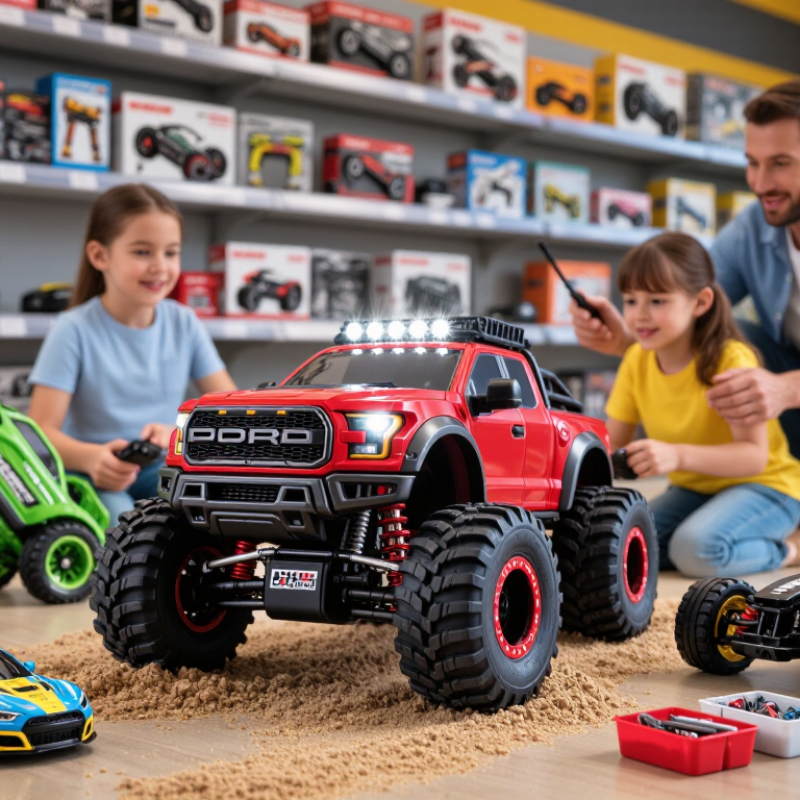
RC Toys also create visible shelf appeal. A 1:16 off-road truck, with rubber tires and working headlights, can demonstrate its value immediately. Buyers can offer entry-level cars for families, stunt models for children, and hobby-grade vehicles for experienced users. The Hobby Manufacturers Association has repeatedly identified hands-on hobbies as valuable pathways into STEM learning. As RC industry educator David Ronnefalk has said, “Every drive teaches you something new.” That practical learning gives RC products stronger engagement than many passive toys.
Wholesale buyers should still examine battery safety, spare-part availability, packaging quality, and age guidance. A low purchase price means little when returns fill the warehouse. Reported market growth also varies by source, product definition, and region. That deserves caution. Some forecasts sound impressively precise, yet real demand can change with freight costs, school holidays, and family budgets.
The strongest wholesale strategy is not simply buying more units. It is building a balanced range, testing customer feedback, and improving the mix over time. That approach is less dramatic. It is usually more reliable.
Why Choose RC Toys for Wholesale Buyers?
What Defines RC Toys and Their Main Product Categories
RC toys are play products controlled through a handheld transmitter, wireless controller, or mobile interface. Their appeal comes from visible movement: a truck climbs a carpet edge, a boat cuts through a shallow pool, or a small aircraft turns above an open field. The category is broad, but not perfectly tidy. Some flying products are better classified as hobby equipment than children’s toys. Wholesale buyers should check age grading, operating range, battery type, spare-part access, and controller compatibility before placing large orders.
The main categories include land vehicles, aircraft, watercraft, and robotic toys. Land vehicles usually offer the widest range, from compact racers to climbing trucks with rubber tires. Aircraft attract older users but need more space and careful supervision. Watercraft require sealed battery compartments and clear instructions for safe use. Robotic products often combine remote control with sensors, lights, sound, or programmable functions. Each category creates different packaging, testing, and after-sales requirements.
Market data supports the category’s commercial relevance. Circana’s 2023 U.S. toy industry review valued total toy sales at approximately 28 billion dollars, showing strong demand across the wider sector. Grand View Research also identifies remote-controlled products as a growing segment within recreational toys. The figures are useful, but they are not a guarantee. In my experience, impressive specifications can still fail on a retail shelf if charging time is long or replacement parts are unclear. Practical playability matters more than a crowded feature list.
| RC Toy Category | What Defines the Category | Typical Control Method | Common Power System | Typical Use Environment | Main Wholesale Appeal | Key Inventory Considerations | Typical Safety Focus |
|---|---|---|---|---|---|---|---|
| RC Cars and Trucks | Land vehicles driven by remote control, including racing cars, off-road trucks, buggies, and crawlers. | Steering Throttle Forward / Reverse | Rechargeable lithium-ion or lithium-polymer battery packs; some entry-level models use replaceable dry-cell batteries. | Indoor floors, paved surfaces, driveways, dirt, grass, and purpose-built tracks, depending on the chassis. | Broad consumer recognition, easy demonstration, strong variation in size and performance, and suitability for gift and hobby channels. | Wheel and body durability, battery compatibility, replacement tires, charging time, and packaging size. | Moving wheels, pinch points, battery charging, and age-appropriate supervision. |
| RC Crawlers and Off-Road Vehicles | Vehicles designed for slow, controlled movement over uneven terrain using high ground clearance and flexible suspension. | Proportional Steering Low-Speed Throttle | Rechargeable battery packs, usually with electric motors and geared drivetrains. | Rocks, soil, gravel, grass, and other uneven outdoor surfaces. | Appeals to users who value realistic movement, obstacle driving, durability, and repeat play rather than maximum speed. | Ground clearance, waterproofing claims, drivetrain strength, spare parts, and tire traction. | Outdoor supervision, vehicle recovery, water exposure, and safe battery handling. |
| RC Boats | Watercraft controlled from shore, including speed boats, patrol-style boats, sailboats, and beginner models. | Rudder Throttle Forward / Reverse | Rechargeable battery packs powering an electric motor; propulsion is commonly provided by a propeller or jet system. | Suitable pools, ponds, and calm freshwater areas, subject to product instructions and local conditions. | Distinctive outdoor play experience, strong visual appeal, and seasonal potential for leisure and gift sales. | Water-resistant construction, battery compartment sealing, propeller protection, transport packaging, and drying instructions. | Water safety, electrical protection, propeller contact, and keeping the product away from swimmers. |
| RC Aircraft | Fixed-wing or rotary-wing flying toys controlled through a transmitter, including beginner aircraft and small helicopters. | Throttle Yaw Pitch / Roll | Rechargeable battery packs, commonly using lightweight electric motors. | Open outdoor spaces; some small models are designed for controlled indoor use. | High demonstration value, hobby appeal, and clear product differentiation through flight stability and control features. | Impact resistance, replacement propellers, flight time, charging accessories, calibration, and protective packaging. | Propeller movement, flying clearance, weather conditions, bystander safety, and local operating requirements. |
| RC Drones and Quadcopters | Multi-rotor flying devices using several electric motors and propellers to achieve vertical takeoff and controlled flight. | Altitude Control Directional Flight Return Functions | Rechargeable lithium-polymer battery packs with dedicated balance charging requirements. | Open, unobstructed areas; use may be subject to local aviation, privacy, and age-related rules. | Technology-focused appeal, compact storage, feature-based merchandising, and strong interest in entry-level learning products. | Battery safety, spare propellers, controller pairing, firmware or app support, flight stability, and regulatory labeling. | Rotor guards, eye and face protection, clear flight zones, privacy awareness, and compliance with local regulations. |
| RC Construction Vehicles | Remote-controlled replicas or toy versions of excavators, loaders, dump trucks, cranes, and similar work vehicles. | Multi-Channel Control Arm / Bucket Functions | Rechargeable or replaceable-battery electric systems; some models use separate motors for working attachments. | Indoor play areas, sand, soil, and controlled outdoor surfaces, depending on the design. | Combines vehicle play with role-play, moving functions, and educational interest in engineering and machinery. | Attachment durability, actuator or gear quality, product weight, spare components, and carton protection. | Moving arms, buckets, lifting parts, pinch points, and supervision around younger children. |
| RC Robots and Transforming Toys | Interactive robotic or transforming products that combine wireless movement with lights, sounds, gestures, or programmable actions. | Directional Control Gesture / Button Input Preset Modes | Rechargeable or replaceable batteries, with electronic control boards, motors, LEDs, and speakers. | Indoor floors and smooth surfaces with sufficient operating space. | Strong novelty appeal, interactive play value, and suitability for technology, gift, and entertainment-oriented retail categories. | Battery access, sound and light functions, motor noise, controller usability, software reliability, and impact resistance. | Small parts, moving joints, battery compartments, sound levels, and age grading. |
| RC Stunt and Specialty Toys | Products built around distinctive actions such as spinning, flipping, climbing, balancing, or performing repeated tricks. | One-Hand Control Preset Stunts Variable Speed | Rechargeable battery packs are common because stunt functions require frequent motor output. | Clear indoor floors or smooth outdoor surfaces, depending on the product construction. | High visual impact, easy in-store demonstration, social-play potential, and clear differentiation from standard vehicles. | Impact resistance, wheel or axle replacement, charging convenience, controller range, and demonstration space. | Collision risks, moving parts, floor and furniture protection, and safe distance from people and pets. |