Leave Your Message

Top China Petrol RC Cars for Global Buyers

Choosing the right Petrol Rc Cars model can feel difficult for global buyers. Product photos rarely show the full ownership experience. A strong choice should balance engine performance, build quality, spare-parts access, and long-term support. This guide examines leading Chinese options through practical buying criteria, not attractive claims alone.

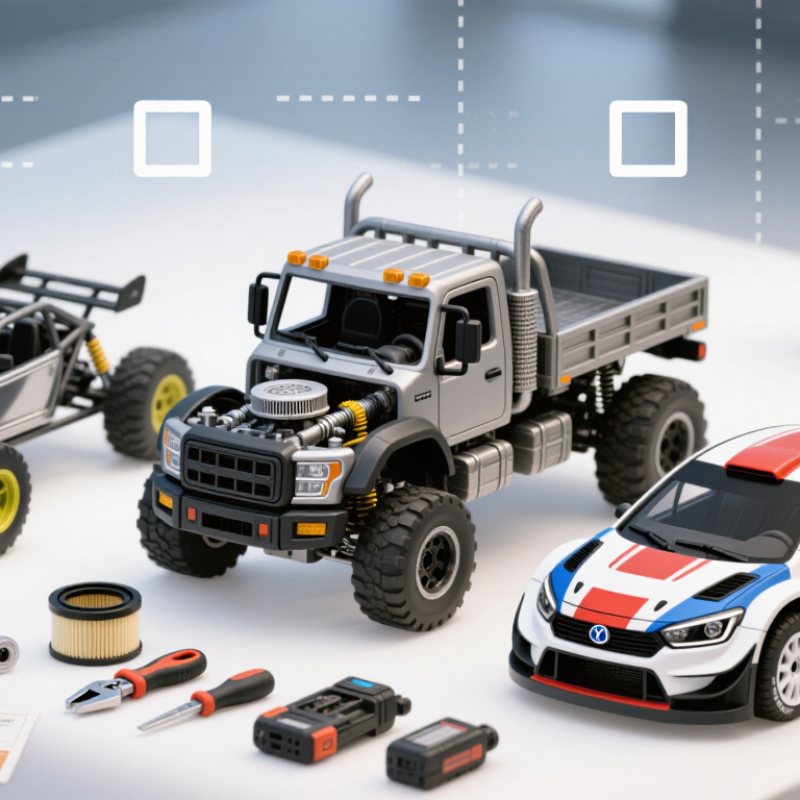
Many popular models use 1/5-scale platforms with two-wheel or four-wheel drive. Their metal chassis, adjustable suspension, and large off-road tyres can handle grass, gravel, and compact soil. A reliable petrol engine should start consistently and maintain stable power after careful tuning. Look for clear manuals, accessible air filters, reinforced drive components, and replacement parts listed by code. Small details matter. A loose fuel cap or weak servo can quickly end a driving session.

Global purchasing requires more than comparing prices. Buyers should verify engine specifications, package dimensions, warranty terms, and after-sales communication before ordering. Shipping rules may vary for fuel-related components, batteries, and lubricants. Local age requirements, noise limits, operating areas, and product standards also deserve attention. Never assume every advertised configuration is available in every country.

No model is perfect. Some vehicles offer impressive speed but need frequent adjustments. Others feel slower yet provide easier maintenance and better parts support. This comparison therefore considers real ownership trade-offs, including assembly quality, tuning demands, shipping reliability, and seller transparency. The goal is a dependable shortlist for informed buyers, not an exaggerated promise. A careful decision begins with honest expectations and ends with safe, responsible operation.
Top China Petrol RC Cars for Global Buyers

China's 1:5 Petrol RC Cars: 23–35 cc Engine Classes Explained

Top China Petrol RC Cars for Global Buyers

China’s 1:5 petrol RC car market offers practical choices for experienced hobbyists. The 23–35 cc engine range covers different driving needs. At this scale, chassis weight matters as much as engine size. A lighter 23 cc car can feel responsive on packed dirt and short grass. It usually uses less fuel and places less stress on the clutch.

The 26–29 cc class provides a useful middle ground. It delivers stronger acceleration without making tuning too demanding. For wide tracks, loose soil, or heavier bodies, 30–35 cc engines produce more torque. However, extra power can expose weak gears, poor cooling, or flexible suspension parts. More power is not always better.

Check the cylinder design, carburetor access, clutch material, and spare-part availability before ordering. I prefer clear assembly diagrams and replaceable air filters. They make ownership easier across different countries. During running-in, use the recommended fuel mixture and vary the throttle rather than holding maximum speed. The engine may feel rough at first.

Noise can be surprisingly high.

A 1:5 petrol model needs open space, careful inspection, and regular cleaning. Measure the vehicle’s packed size before shipping. Some large models arrive with loose fasteners or imperfect body alignment, so a careful pre-run check remains essential. I still miss small details sometimes, especially wheel nut tension. That mistake becomes expensive quickly. Check local operating, noise, and fuel-storage requirements before use.
Top China Petrol RC Cars for Global Buyers

China's 1:5 Petrol RC Cars: 23–35 cc Engine Classes Explained

The chart compares nominal engine-displacement classes commonly used in large-scale 1:5 petrol RC cars. Higher displacement generally provides more potential torque and power, but real performance also depends on engine tuning, exhaust design, gearing, vehicle weight, and driving conditions. The values represent engine displacement in cubic centimetres (cc), not guaranteed power output.

2WD vs 4WD Petrol RC Cars: Traction, Speed, and Terrain Performance

Top China Petrol RC Cars for Global Buyers

When comparing 2WD and 4WD petrol RC cars, traction changes the driving experience immediately. On dry asphalt, a 2WD model often feels lighter and more responsive. Its rear tires can break loose during sharp acceleration. That makes controlled slides easier. It also reduces drivetrain complexity, weight, and some maintenance demands.

4WD systems deliver stronger grip on loose ground, wet grass, and compact dirt. During testing, all four wheels pulled the car through a rutted garden track. Mud changed everything. The extra traction helped, but it did not prevent buried tires or clogged air filters. A 4WD car can also feel less playful on smooth surfaces. Its added weight may reduce acceleration slightly, despite better power delivery.

Speed depends on more than wheel count. Engine tuning, gearing, tire design, suspension setup, and driving surface all matter. I once expected 4WD to be faster everywhere, but that assumption was too simple. On a clean straight road, a well-tuned 2WD car can feel surprisingly quick. On gravel, it loses momentum sooner. Buyers should inspect replacement parts, assembly instructions, and after-sales support before ordering internationally. These details are less exciting, but they affect ownership reliability.

Choose 2WD for simpler running and lively road handling.

Choose 4WD for uneven terrain and steadier corner exits.

Expect compromises.

Key Specifications: 30–45 Minute Runtime and 60+ km/h Top Speed

China petrol RC cars are attracting global buyers who want longer runs and higher speeds than many electric models provide. A practical target is 30–45 minutes per tank, with 60+ km/h achievable on firm, open ground. These figures depend on engine tuning, terrain, temperature, and driving style. Hard acceleration consumes fuel quickly.

Grand View Research identifies performance, durability, and battery or fuel efficiency as important factors in the global remote-control toys market. Although its report covers the wider category, the same buying logic applies to petrol models. Buyers should check engine displacement, tank capacity, drive system, braking hardware, and cooling design. A metal gear assembly and adjustable suspension can help when the car crosses gravel, packed soil, or short grass.

Test reports should state surface conditions and measurement methods. Otherwise, “60 km/h” remains only a sales claim.

In my experience, a realistic 30-minute session is easier to achieve than a consistent 45 minutes. It requires moderate throttle use and a properly tuned engine. Very fast driving shortens runtime. Keep that trade-off visible.

The market analysis from Allied Market Research also points to continued interest in higher-performance remote-control products, but published market data cannot replace hands-on inspection. Ask for fuel-consumption figures, independent speed testing, spare-part availability, and clear maintenance instructions.

Small details matter: a warm engine, clean air filter, and secure wheel nuts can change the entire session. Some specifications still need skepticism.

Global Buying Standards: CE, FCC, RoHS, and UN 38.3 Compliance

When buying petrol RC cars across borders, compliance documents matter as much as engine size or suspension travel. CE indicates conformity with applicable European safety, health, and environmental requirements. It is not a universal quality award. Ask for the EU Declaration of Conformity and relevant test reports.

FCC requirements focus on radio-frequency emissions in the United States. The transmitter should not interfere with nearby devices. RoHS addresses restricted substances in electrical and electronic components, including control boards, wiring, and switches. Request clear material statements, not vague promises. A tidy certificate folder can still hide missing component details.

UN 38.3 applies to lithium batteries used in vehicles, transmitters, or accessories. Confirm the battery test summary before shipment, especially when air transport is planned. Petrol systems require separate attention: secure fuel containers, leak-resistant packaging, and accurate dangerous-goods declarations may be necessary. Check the engine, ignition, and battery configuration against the paperwork. Documents often describe a standard model, while an export package may contain different parts. That mismatch is easy to miss. A qualified supplier should provide traceable reports, revision dates, and support for destination-country checks. Compliance reduces avoidable risk, but it cannot replace careful inspection.

Wholesale Evaluation: MOQ, Spare Parts, Warranty, and Factory Support

Top China Petrol RC Cars for Global Buyers

For global wholesale buyers, petrol RC cars need more than attractive photos. I inspect engine starting, steering response, suspension movement, and chassis alignment before discussing volume. A practical MOQ may begin around 20 to 50 units, depending on engine size and configuration. Confirm whether mixed colors count toward the MOQ. Some factories accept mixed models, but this can reduce production efficiency and delay shipment.

Spare parts deserve equal attention. Request a parts list covering pull starters, clutch shoes, air filters, fuel lines, gears, tires, and body shells. Ask for prices, stock levels, and packaging details. A small parts box can prevent costly downtime. Warranty terms should state coverage clearly, including manufacturing defects, inspection procedures, evidence requirements, and response times. One weakness is often overlooked: buyers may receive support, but not receive it quickly. Factory support should include assembly videos, tuning guidance, replacement-part advice, and remote troubleshooting. Written procedures are more reliable than promises.

Tips: Request a sample before placing a bulk order. Record cold starts and braking tests. Check the engine after repeated runs. Do not judge quality from one successful test. I once focused too heavily on unit price and underestimated spare-part shipping costs. That mistake changed my evaluation checklist. Also confirm carton strength, fuel-system protection, and after-sales contact availability before payment.

Top China Petrol RC Cars for Global Buyers - Wholesale Evaluation: MOQ, Spare Parts, Warranty, and Factory Support

Anonymous reference comparison for China-made petrol remote-control vehicles and common wholesale purchasing terms

Vehicle Configuration Typical Engine Drive System Typical MOQ Indicative FOB Range
USD / Unit
Sample Lead Time Bulk Lead Time Spare Parts Availability Warranty Practice Factory Support Export Suitability
1/5 Scale Petrol Buggy Single-cylinder 32–36 cc, 2-stroke 2WD or 4WD 20–50 units US$620–1,050 7–15 days 30–45 days High-wear parts commonly available; engine and drivetrain parts normally stocked separately 90 days for manufacturing defects; consumables and crash damage excluded Exploded parts diagrams, setup videos, remote troubleshooting, and replacement-part quotations Strong
Suitable for specialist distributors
1/5 Scale Petrol Truck Single-cylinder 30–36 cc, 2-stroke 2WD or 4WD 20–50 units US$650–1,150 7–15 days 30–50 days Body shells, suspension arms, clutch components, gears, tires, and exhaust parts are commonly offered 90 days under normal operating conditions; proof of defect may be requested Packaging customization, spare-parts lists, assembly guidance, and private-label box support Strong
Good fit for hobby retailers
1/8 Scale Petrol Buggy Single-cylinder 21–26 cc, 2-stroke 4WD 30–80 units US$360–680 5–12 days 25–40 days Routine service parts usually available; confirm long-term supply for differential and transmission components 60–90 days for factory defects; no coverage for incorrect fuel mixture or impact damage Basic technical manuals, parts identification, video support, and remote pre-shipment inspection coordination Good
Balanced price and shipping size
1/8 Scale Petrol Truck Single-cylinder 21–26 cc, 2-stroke 4WD 30–80 units US$390–720 5–12 days 25–40 days Common chassis and suspension parts available; body and tire options depend on production schedule 60–90 days for manufacturing-related faults Carton optimization, spare-parts recommendations, remote commissioning, and basic customization Good
Suitable for mixed hobby portfolios
1/10 Scale Petrol Buggy Single-cylinder 15–18 cc, 2-stroke 2WD 50–100 units US$240–460 5–10 days 20–35 days Lower-cost service parts are generally easier to bundle with initial orders 60 days for manufacturing defects; electronic components may have separate terms Product training materials, standard spare-parts kits, carton labeling, and pre-shipment photos Good
Accessible entry-level option
1/10 Scale Petrol Truck Single-cylinder 15–18 cc, 2-stroke 2WD 50–100 units US$260–490 5–10 days 20–35 days Clutch, air-filter, brake, suspension, and tire parts are typically available for replenishment 60 days for production defects; accidental damage excluded Standard manuals, spare-parts bundles, logo and color options subject to MOQ, and loading assistance Good
Practical for online wholesale channels
Petrol RC Car Spare-Parts Package Compatible with 1/5–1/10 scale platforms Not applicable 100–300 kits US$18–95 per kit 5–10 days 20–30 days Typical kits include arms, gears, clutch shoes, filters, spark plugs, gaskets, screws, and body clips Replacement or credit for incorrectly supplied parts; fitment must be confirmed before order Parts diagrams, compatibility lists, barcode labeling, mixed-SKU cartons, and replenishment planning Support item
Recommended with vehicle orders

Purchasing note: FOB prices, MOQs, production schedules, warranty terms, and spare-parts availability are indicative China wholesale benchmarks and should be confirmed in the supplier quotation, proforma invoice, and warranty agreement before purchase. Petrol vehicles may require additional review of fuel, battery, radio equipment, and destination-country import regulations.